
Managing Stressors in Medical School
Managing medical school stressors can be challenging. In fact, since many medical students aren't expecting the level and intensity of the workload, as well as other stressors such as preparing for exams, decreased self-care, and social and familial conflicts, the rate of burnout is high and can be reached quickly.
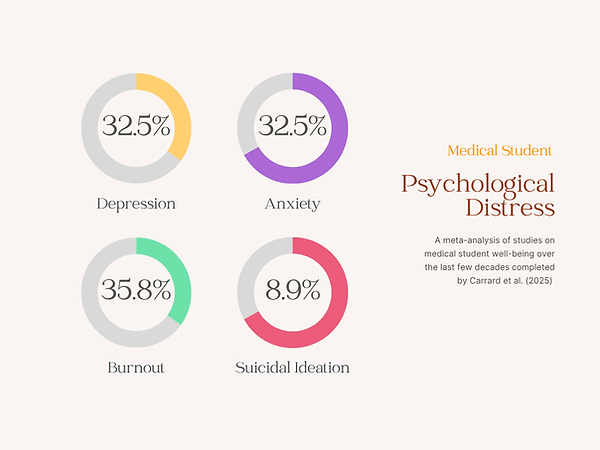
Why is this important? Medical students are at higher risk for emotional distress, such as imposter phenomenon (IP) and maladaptive perfectionism due to high expectations not only of medical school, but of themselves as well. Left unmanaged, these high expectations, common and unexpected stressors, and IP can lead to symptoms such as increased anxiety, depression, and even suicidal ideation (Dyrbye et al., 2011; Henning et al.,1998; Vitaliano et al., 1984). Reduced self-care, isolation, and fewer supports increase this risk (Dyrbye et al., 2011; Goldman et al., 2015).
I created SMART as a practical wellness guide for first-year medical students to help manage the common and unexpected stressors associated with medical school, reducing their risk for IP as well. The wellness guide is based on research with medical students who found themselves struggling to balance academic demands with everyday life and self-care.
The SMART Framework:
Structure
Mindfulness
Allies
Right-Mind
Therapy and Self-Care
The SMART Framework is structure and routine combined with mindfulness and self-awareness. SMART is a mindfulness-based approach that integrates mindfulness activities and strategies into your schedule to help prevent burnout.
Structure and routine are important for any lifestyle because it provides the consistency needed for maintaining healthy habits.
Mindfulness is a proven approach for managing stress because it reduces rumination and worry by being in the present moment. It increases self-awareness through acceptance and will also help you determine when you may need more support (Buchholz, 2015; Manova & Khoury, 2023).
There are 5 steps to SMART:
-
Create Structure by having a daily routine and schedule for your academics and self-care.
-
Explore Mindfulness-based practices and determine the ones that best fit for you and your interests.
-
Identify Allies and create a support system you can rely on in times of increased stress.
-
Cultivate a Right-Mind mindset and perception that is self-kind and compassionate.
-
Actively engage in talk Therapy and integrate self-care into your daily routine.
The SMART framework is easy to use and incorporate into your lifestyle. This website will provide you with resources and strategies that will help you practice the SMART wellness approach to managing stress in medical school. Click on each step below for strategies to help you find academic/life balance.