Stressors in Medical School
There are many reasons why medical students may feel stress and anxiety during medical school.
These stressors can range from external factors such as academic workload to internal factors such as feeling overwhelmed and anxious (Bin Abdulrahman et al., 2021).
Expected stressors could include hands-on learning such as exposure to cadavers, financial stress, a rigorous academic workload, and a school/life imbalance. Unexpected stressors can amplify this, leading to burnout, anxiety, or psychological distress.


Unexpected Stressors
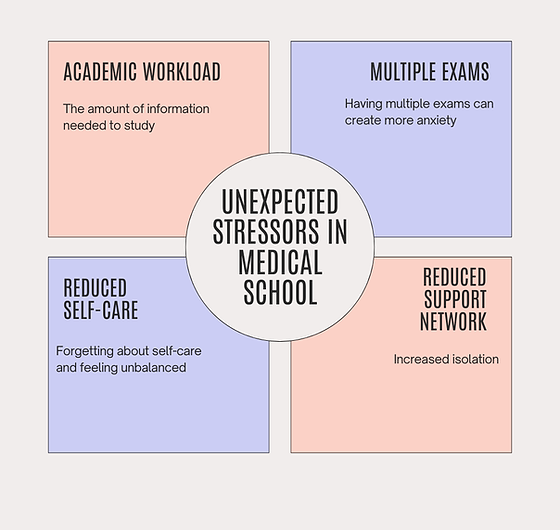
During the coursework years, the amount of information to study and memorize is greater than expected and can feel overwhelming.
Some medical students begin medical school by using study methods they are most comfortable with, however sometimes these methods can lead to even longer study times. Additionally, some medical students feel increased anxiety from having multiple exams every few weeks.
Therefore, the monotonous long days of studying can lead to an increase in anxiety and a decrease in self-care, since medical students tend to prioritize studying.
This will also lead to isolation and a reduced sense of support, as well as neglecting self-care. Neglecting self-care can look like poor sleeping and eating habits that can contribute to feelings of isolation and anxiety.
"I used to take notes on paper. But I wanted to do better time management. So I started taking notes on my iPad. But then I realized that wasn't helpful either, and taking notes wasn't effective for the cumulative volume of information we were learning"

Academic Workload
There are daily lectures that cover large amounts of material. Some students have referred to it as a 'fire hydrant' of information.
Study strategies used in undergraduate can be time consuming and students find they need to 'relearn how to learn' to manage time and study more efficiently.

Multiple Exams
There are exams every few weeks following each block of content. Some exams cover as many as 40 lectures. Students have shared that it can be challenging to cover all the material for exams.
Additionally, having an exam every few weeks can increase anxiety because of worry to do well on them.
Reduced Self-Care
Many medical students spend long hours studying and forget about basic self-care like healthy eating and sleeping habits. Poor eating and sleeping habits can eventually lead to burnout.

Support Network Challenges
It isn't uncommon for students to isolate as they spend long hours studying. Sometimes family and friends who aren't familiar with medical school may not understand the challenges you are facing.

Imposter Phenomenon
Some medical students will also experience imposter phenomenon (IP). IP is common in medical school and can also lead to increased stress, anxiety, and depression if not managed effectively. SMART can help medical students manage IP as well. Click below to learn more about IP and its symptoms.
If you aren't managing these stressors effectively, it can lead to burnout. 20% of medical students will experience stress leading to burnout by their 4th year of medical school (Moczko et al., 2016). However, you can manage these stressors by simply being prepared. The SMART framework to wellbeing can help you achieve that.
SMART is a mindfulness-based approach that integrates mindfulness activities and strategies into your schedule to help prevent burnout.
I created SMART as a practical wellness guide for first-year medical students to help manage the common, and unexpected stressors associated with medical school. The guide is based on feedback received from medical students who found themselves struggling to balance academic demands with everyday life and self-care.